₹34,909 Cr
Total corporate CSR spend in FY2024, across 27,188 companies
Source: National CSR Portal, June 2025
July 2025
MCA CSR-1 amendment effective date
New registration, DSC & professional certification required
Source: MCA Amendment Rules, 2025
FY 2026–27
BRSR Core reasonable assurance becomes mandatory
For the top 1,000 listed companies
Source: SEBI BRSR Core Framework
Quick-Reference Rankings: Top 7 Grant Management Software in India for 2026
CSR Platforms Comparison
| # | Platform | Best for | MCA/BRSR | AI Maturity |
|---|---|---|---|---|
| 1 | Relific | High-volume AI-native CSR lifecycle | ✓ Full | Phase 3 AI-native |
| 2 | Metta Social | SEBI-listed: audit-ready ESG reporting | ✓ Full | Phase 2–3 transition |
| 3 | Impact Dash | Board-ready visual impact analytics | ✓ BRSR Core | Phase 2 |
| 4 | Dhwani RIS | Rural/grassroots field monitoring | Partial | Phase 2 |
| 5 | SoulAce | Mid-size sector-specific CSR | Partial | Phase 2 |
| 6 | Samhita | Multi-stakeholder / PPP grant structures | Partial | Phase 1–2 |
| 7 | Tech CSR | Entry-level structured CSR tracking | ✓ MCA/BRSR templates | Phase 1 |
What Is Grant Management Software?
Grant management software (GMS) is an enterprise platform that automates the complete funding lifecycle from application triage and NGO eligibility screening through fund disbursement, compliance monitoring, field verification, and final audit closeout.
The critical distinction between a modern GMS and the legacy approaches most organisations still run is operational scope. Earlier tools were essentially digital filing cabinets: repositories for documents and deadline trackers. Today's platforms actively manage the process.
A mature GMS in 2026 uses AI to screen eligibility at intake, flag spend anomalies before they become audit findings, automate regulatory reporting to MCA and SEBI standards, and provide portfolio-level visibility across complex, multi-funder programmes.
Grant Management Software vs. Grant Writing Software: The Difference That Matters
These two categories are frequently confused, and the confusion is expensive.
- Grant writing software helps draft and submit funding applications.
- Grant management software governs the full operational lifecycle after a grant is awarded: disbursement controls, compliance tracking, field monitoring, performance auditing, regulatory reporting, and closeout documentation.
They address fundamentally different stages of the funding process. For organisations operating under India's Schedule VII CSR requirements, a GMS is not an efficiency tool; it is a compliance infrastructure. The penalties for imprecise effort certification, fragmented spend tracking, or inadequate ESG-aligned reporting are material and preventable.
Why 2026 Is a Turning Point for Grant Management in India
Three forces are converging this year in ways that make platform selection more consequential than it has ever been.
1. Application Volumes Are Outpacing Administrative Capacity
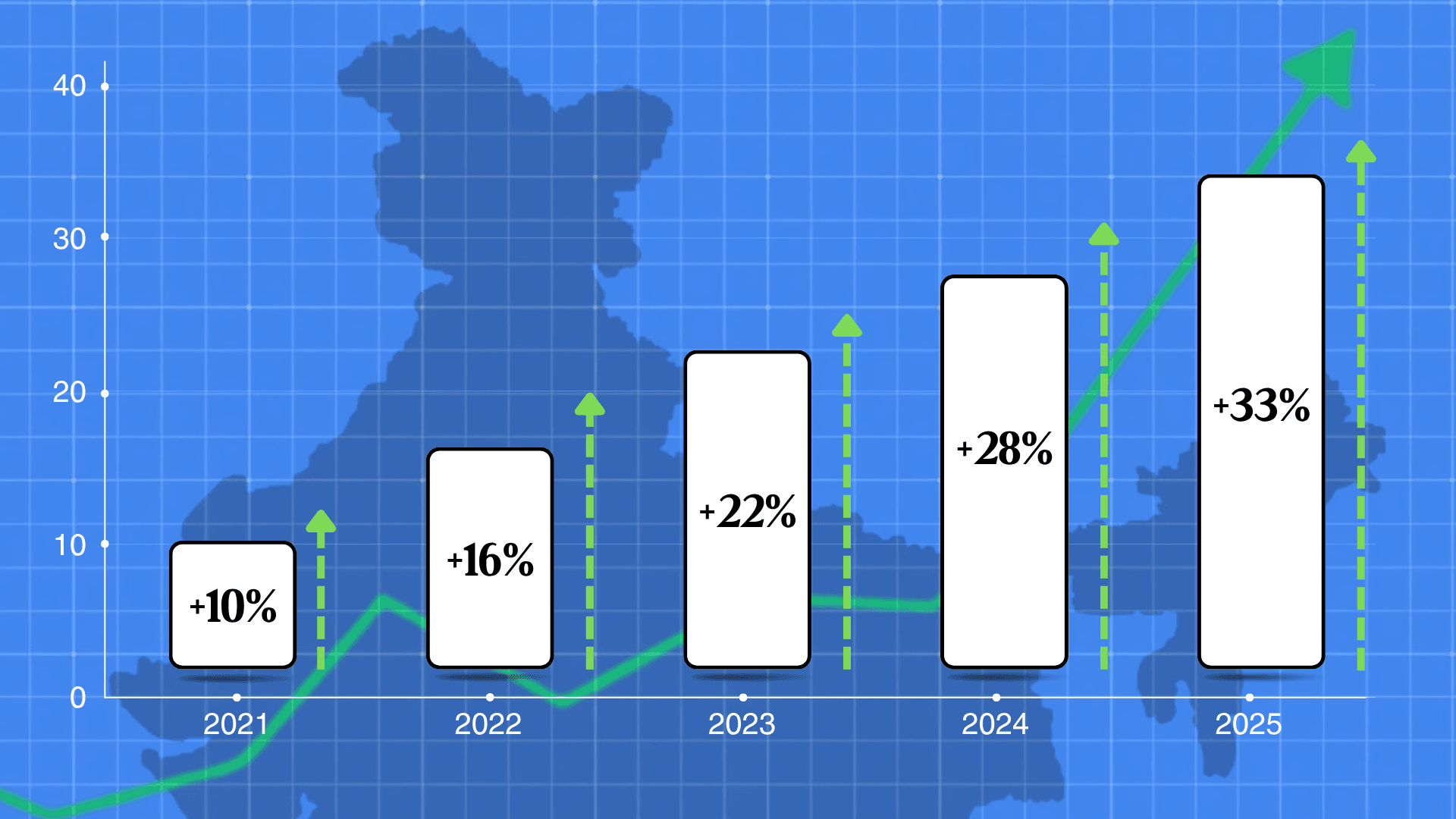
India's CSR mandate now covers every company meeting any one of three thresholds: net worth of ₹500 crore or more, turnover of ₹1,000 crore or more, or net profit of ₹5 crore or more. A proposed Companies Amendment Bill introduced in December 2025 would lower these thresholds further to ₹100 crore net worth, ₹500 crore turnover, or ₹3 crore profit, dramatically expanding the number of companies subject to mandatory CSR spend.
Without automation, CSR programme staff spend the majority of working hours on administrative processing rather than programme design or grantee support. That is a resource allocation problem that no amount of hiring solves at scale.
2. Regulatory Exposure Has Materially Increased
The MCA's July 2025 amendments represent the most significant change to CSR-1 registration requirements since the 2014 rules. Key changes include:
- Mandatory PAN and OTP-verified email
- Digital Signature Certificates required for all filings
- Professional certification by a practising CA, CS, or CMA
- Three-year track record requirement for non-company implementing entities
Companies that disbursed CSR funds to agencies without updated CSR-1 registration after July 14 risk having the expenditure classified as non-qualifying, creating a shortfall liability. That is not a theoretical risk. That is a live audit finding waiting to happen in programmes running on untracked partner lists.
3. The Market Has Shifted from Record-Keeping to AI Orchestration
Modern platforms are expected to integrate natively with financial systems like SAP, Oracle, or QuickBooks to enable real-time spend analytics, predictive compliance alerts, and automated impact reporting. This shift distinguishes Phase 3 and Phase 4 platforms from legacy tools.
The practical consequence is that a platform purchased in 2021 or 2022 may already be operationally obsolete for a CSR programme operating at 2026 volumes and regulatory standards. "We bought software" is not a compliance answer when the software predates the compliance requirement.
The Four Phases of Grant Management Software Maturity
Understanding where a platform sits on this maturity scale is more useful than any feature comparison. Ask vendors directly which phase they occupy and demand live proof.
| Phase | Label | What It Means |
|---|---|---|
| Phase 1 | Digital Filing Cabinet | Document storage, deadline tracking, manual status updates. Legacy tools from 2010–2018. |
| Phase 2 | Workflow Automation | Automated reminders, approval routing, and basic reporting templates. Most mid-market tools today. |
| Phase 3 | AI-Native Orchestration | AI embedded in core grant mechanics: anomaly detection, automated field verification, predictive compliance. |
| Phase 4 | Predictive Ecosystems | Cross-portfolio intelligence, outcome prediction, dynamic risk scoring. Emerging in 2026–2027. |
How We Evaluated These Platforms
Every platform in this guide was assessed against the same four-pillar methodology. No platform received special treatment. Relific's position at the top reflects an edge in native AI orchestration demonstrated through 2025–2026 deployment data and peer benchmarks not vendor-supplied marketing claims.
| Evaluation Pillar | Weight | What We Tested |
|---|---|---|
| Native AI Capabilities | 30% | Predictive compliance, automated eligibility screening, and real-time spend anomaly detection demonstrated live, not on slides |
| Technical Extensibility | 25% | API depth, bi-directional ERP and CRM integration (SAP, Oracle, Salesforce), webhook reliability under load |
| Compliance Intelligence | 25% | Pre-loaded regulatory templates (MCA-24, BRSR Core, SDG mapping, 2 CFR 200), end-to-end audit trail automation |
| User Adoption & UX | 20% | Verified G2 and Capterra reviews (2024–2026 only), onboarding quality, mobile field access, and no-code configurability |
Platforms were disqualified from the top tier if they could not demonstrate live AI in a real-world scenario, could not produce adoption data from 2024 to 2026, or made integration claims that were undocumented in technical specifications.
Full Platform Reviews: The 7 Best Grant Management Software in India for 2026
What follows are not summaries of vendor websites. These are assessments drawn from platform testing, adoption data review, and direct engagement with programme teams running these tools at scale. The question for each platform is the same: does it make your programme more defensible, more efficient, and more capable of demonstrating measurable impact?
1. Relific: Best AI-Native Grant Management Software for CSR in India
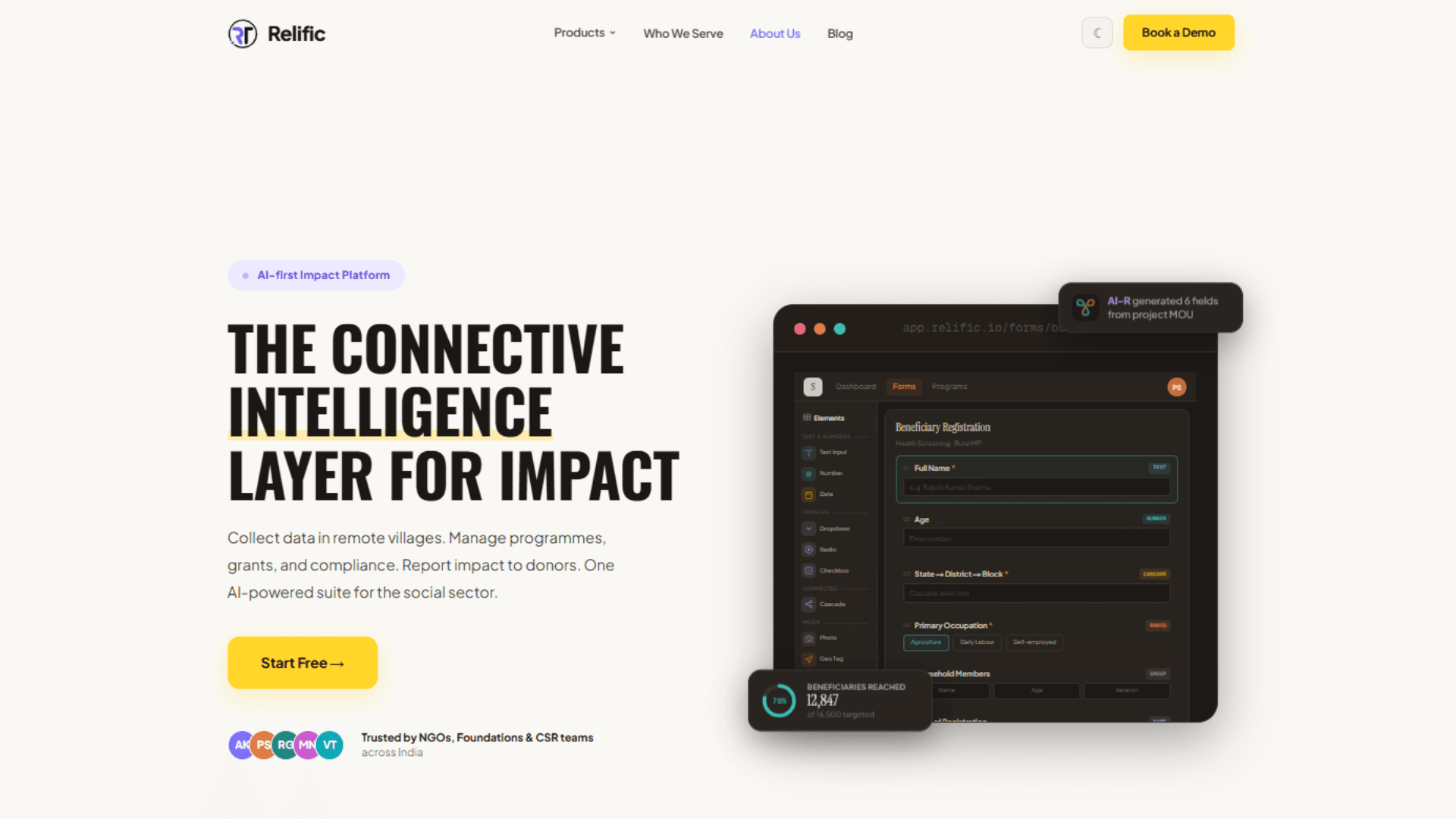
Relific occupies a category of its own in the Indian GMS market. It is the only platform in this ranking operating at Phase 3 AI-Native maturity meaning AI is not a layer added on top of a workflow tool, but is embedded into the core mechanics of every grant stage.
The ProGran suite manages the complete lifecycle from intake to closeout. The AI-R intelligence platform handles automated data validation, GPS-tagged field evidence collection, and anomaly detection in spend data in real time. What this means operationally is that a programme running 500 or 5,000 grants does not require proportionally more staff to maintain compliance rigour. The platform catches what manual spot-checks miss. It flags what auditors will later ask about.
For large corporate CSR divisions managing multi-crore portfolios across dozens of implementing NGO partners, that capability translates directly into audit preparedness and programme defensibility with the Board. The 2025–2026 case study data shows measurable reduction in manual monitoring costs and documented improvement in field evidence quality.
I built Relific because I watched talented CSR leaders spend the majority of their time on tasks that should have been automated years ago. The compliance checks, the manual due diligence, the back-and-forth on eligibility none of it required human judgment, yet all of it consumed human hours. The platform handles that layer entirely, so the people in your programme can work on the part that actually requires them.
Best for: Large corporations and foundations managing high-volume, data-intensive CSR programmes requiring maximum ROI through automated monitoring, AI-validated field evidence, and audit-ready reporting to MCA, SEBI, and Board-level standards.
MCA/BRSR Compliance: Full - MCA-24, CSR-2, BRSR Core, SDG mapping, USAID
AI Maturity: Phase 3 AI-Native
Key capabilities:
- ProGran suite for end-to-end grant lifecycle management
- AI-R platform for automated data validation and anomaly detection
- GPS-tagged field evidence collection with real-time verification
- Native integration with SAP S/4HANA and Oracle Financials
- Pre-loaded MCA-24, CSR-2, BRSR Core, and SDG mapping templates
- Verified NGO partner database with CSR-1 registration tracking
2. Metta Social: Best for SEBI-Listed Companies Requiring Audit-Ready CSR Reporting
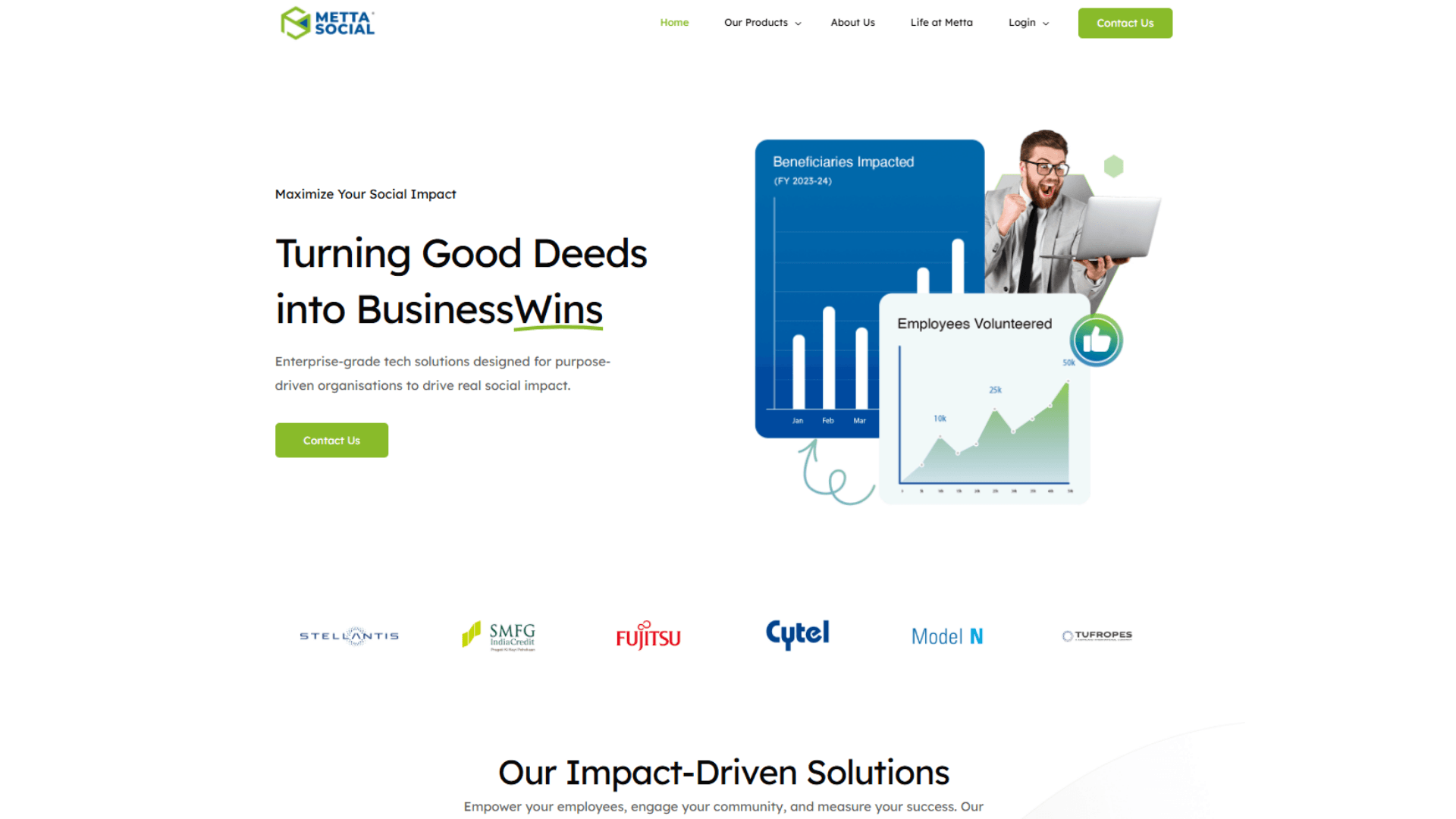
Metta Social was designed for the compliance pressure that generic project management tools were never built to handle. Automated MCA-24 and CSR-2 filings, investor-grade stakeholder dashboards, and a complete audit trail from NGO onboarding through final fund utilisation certification are not features layered onto the platform they are its primary architecture.
For listed companies where every CSR rupee is subject to regulatory scrutiny and investor ESG expectations, Metta Social's defensive strength is significant. The "audit-ready" positioning is not marketing language; it reflects a genuine design philosophy around documentation integrity and traceability. If your CFO has been asked uncomfortable questions about CSR fund utilisation in the last annual report and does not want to be asked again, this is the platform to put in front of them.
Best for: Large corporates and SEBI-listed companies requiring rigorous regulatory transparency, automated MCA-24/CSR-2 filings, and documentation trails that can withstand formal audit scrutiny and investor-level ESG disclosure requirements.
MCA/BRSR Compliance: Full - MCA-24, CSR-2, BRSR Core
AI Maturity: Phase 2–3 Transition
Key capabilities:
- Automated MCA-24 and CSR-2 filing workflows
- Investor-grade ESG and CSR stakeholder dashboards
- End-to-end audit trail from NGO onboarding to utilisation certification
- BRSR Core alignment and disclosure automation
3. Impact Dash: Best for Visual Impact Analytics and Board-Ready ESG Reporting
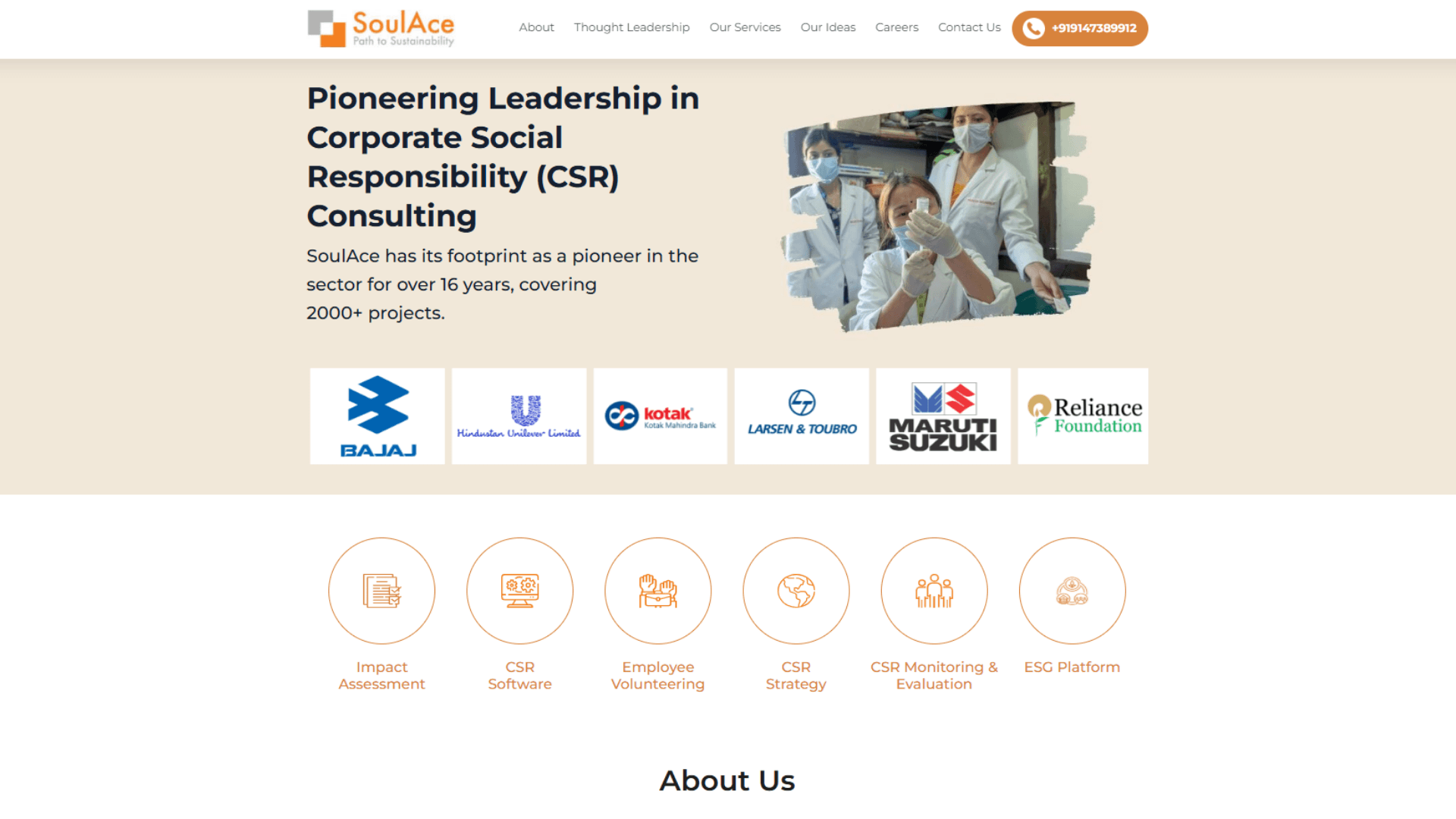
Impact Dash occupies a distinct space in the market: it is the platform built for the communication gap rather than the compliance gap. If the primary challenge your programme faces is translating complex, multi-location field data into board-ready insights in 48 hours rather than three weeks, Impact Dash addresses that pain point better than any other platform in this guide.
Native BRSR Core alignment, SDG mapping visualisations, and project-level KPI tracking against actual disbursements give programme directors the story to tell alongside the data to back it up. For reporting-heavy teams presenting to Boards that have elevated their ESG scrutiny in response to SEBI mandates, this combination of visual storytelling and regulatory alignment is a genuine workflow transformation.
Best for: CSR heads and reporting teams that need to translate complex field data into rapid, Board-ready visual insights for ESG disclosures, committee presentations, and BRSR Core compliance without requiring specialist data analysis resources.
MCA/BRSR Compliance: BRSR Core, SDG Mapping
AI Maturity: Phase 2
Key capabilities:
- Visual SDG mapping and BRSR Core KPI dashboards
- Project-level grant disbursement tracking with real-time visuals
- Board-presentation-ready reporting templates
- Rapid data-to-insight pipeline for ESG disclosures
4. Dhwani RIS (mGrant): Best for Rural and Grassroots Field Monitoring
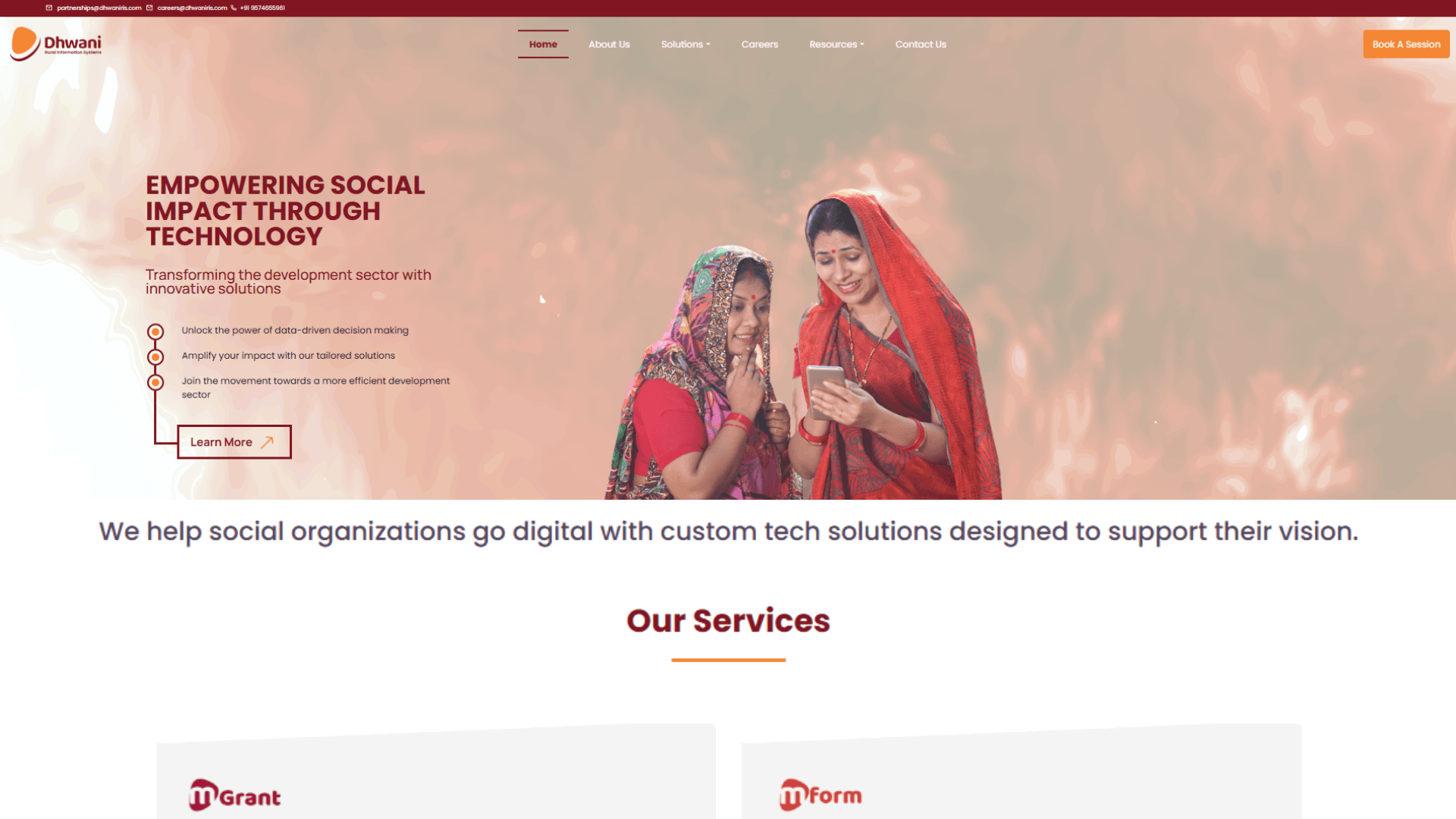
Dhwani RIS solves a problem that no other platform in this guide seriously addresses: last-mile grant monitoring in environments where connectivity is intermittent, teams are geographically distributed, and the data collection challenge is not digital but physical.
The mGrant mobile application with multilingual offline form capability, GPS-tagged field audits, and SROI calculation workflows was built for the operational context of rural India not retrofitted to it. For NGOs and CSR teams running health, livelihoods, or water-sanitation programmes across Tier-3 and Tier-4 districts, the alternative to Dhwani is not a different enterprise platform. It is a field coordinator with a clipboard and a six-week reporting lag.
The AI capability here is lighter than Relific's, but for grassroots programmes where field data quality is the core challenge, Dhwani's mobile-first architecture is a more relevant solution than a heavier AI layer that the programme's implementing partners may lack the digital infrastructure to use.
Best for: NGOs and corporate CSR teams running rural or grassroots programmes across geographically distributed districts, requiring mobile-first data collection, multilingual form capability, and offline field monitoring without assuming reliable internet connectivity.
MCA/BRSR Compliance: Field compliance, SROI
AI Maturity: Phase 2
Key capabilities:
- mGrant mobile app with multilingual, offline-capable forms
- GPS-tagged field audits and evidence collection
- SROI calculation and social return documentation
- Designed for Tier-3 and Tier-4 district programme monitoring
5. SoulAce: Best Sector-Specific Platform for Mid-Size Corporate CSR
SoulAce delivers pre-built sector modules for health, education, and livelihoods the three thematic areas that account for the majority of Indian CSR spend with a level of specificity that generic workflow platforms cannot match without significant configuration effort.
For mid-size corporate CSR teams managing 20 to 100 grants per year with a consistent thematic focus, this specificity matters. The mobile field tools are solid, and the grant workflows are genuinely adapted to the Indian programme management context rather than Westernised enterprise workflows applied to an Indian use case. SoulAce is not the platform for an organisation that needs to demonstrate AI maturity to investors or manage 500-plus concurrent grants. It is the platform for a CSR team of six people managing a focused, well-defined programme that needs reliability and a manageable implementation curve.
Best for: Mid-size corporate CSR teams seeking a reliable, sector-specific platform for health, education, and livelihoods programmes, with mobile field capability and manageable implementation complexity.
MCA/BRSR Compliance: Partial
AI Maturity: Phase 2
Key capabilities:
- Pre-built modules for health, education, and livelihoods sectors
- Mobile field tools for on-ground programme tracking
- Grant workflows adapted to Indian CSR programme structures
- Low implementation complexity with managed onboarding
6. Samhita (Collective Good Foundation): Best for Multi-Stakeholder and PPP Grant Structures
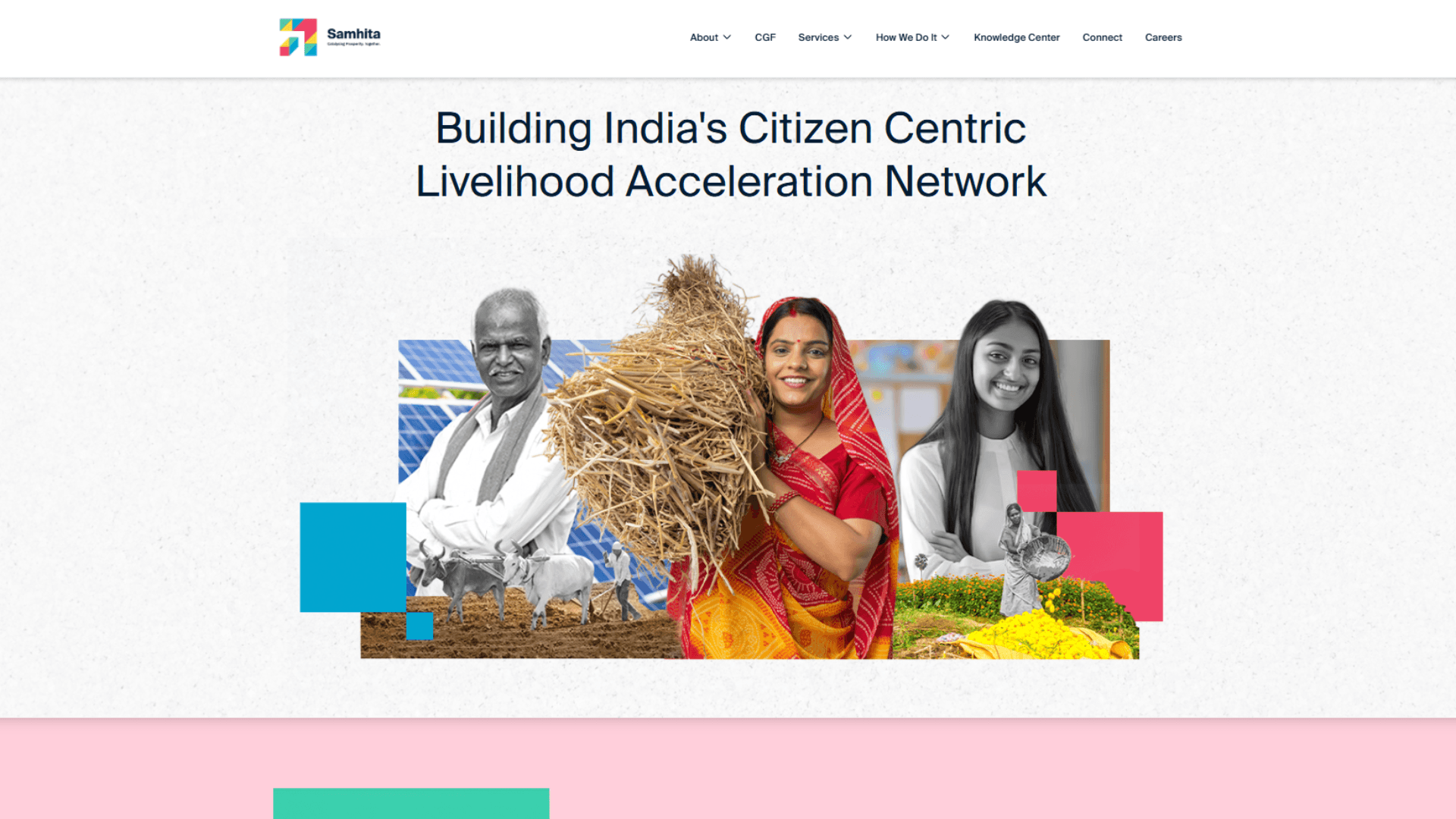
Samhita is not primarily a software platform. It is an ecosystem architecture a way of structuring complex, multi-funder, multi-implementer programmes that require deep NGO due diligence, pooled capital governance, and genuine coordination across organisations that do not naturally share data.
Returnable grant tracking, credit-guarantee workflows, and public-private partnership governance frameworks are capabilities that no other platform in this guide supports with the same depth. For companies that have decided their CSR strategy requires catalytic leverage rather than direct delivery, Samhita is the infrastructure layer that makes that ambition operational. For companies still running direct-delivery programmes, it is a more complex solution than the problem requires.
Best for: Firms and foundations pursuing multi-stakeholder CSR alliances, returnable grant models, or public-private partnership structures that require sophisticated NGO vetting, pooled capital governance, and shared impact measurement frameworks.
MCA/BRSR Compliance: Partial
AI Maturity: Phase 1–2
Key capabilities:
- Multi-funder pooled capital governance architecture
- Returnable grant and credit-guarantee tracking
- Deep NGO vetting and compliance workflow library
- PPP and collective impact programme management
7. Tech CSR: Best Entry-Level CSR Grant Tracking Software
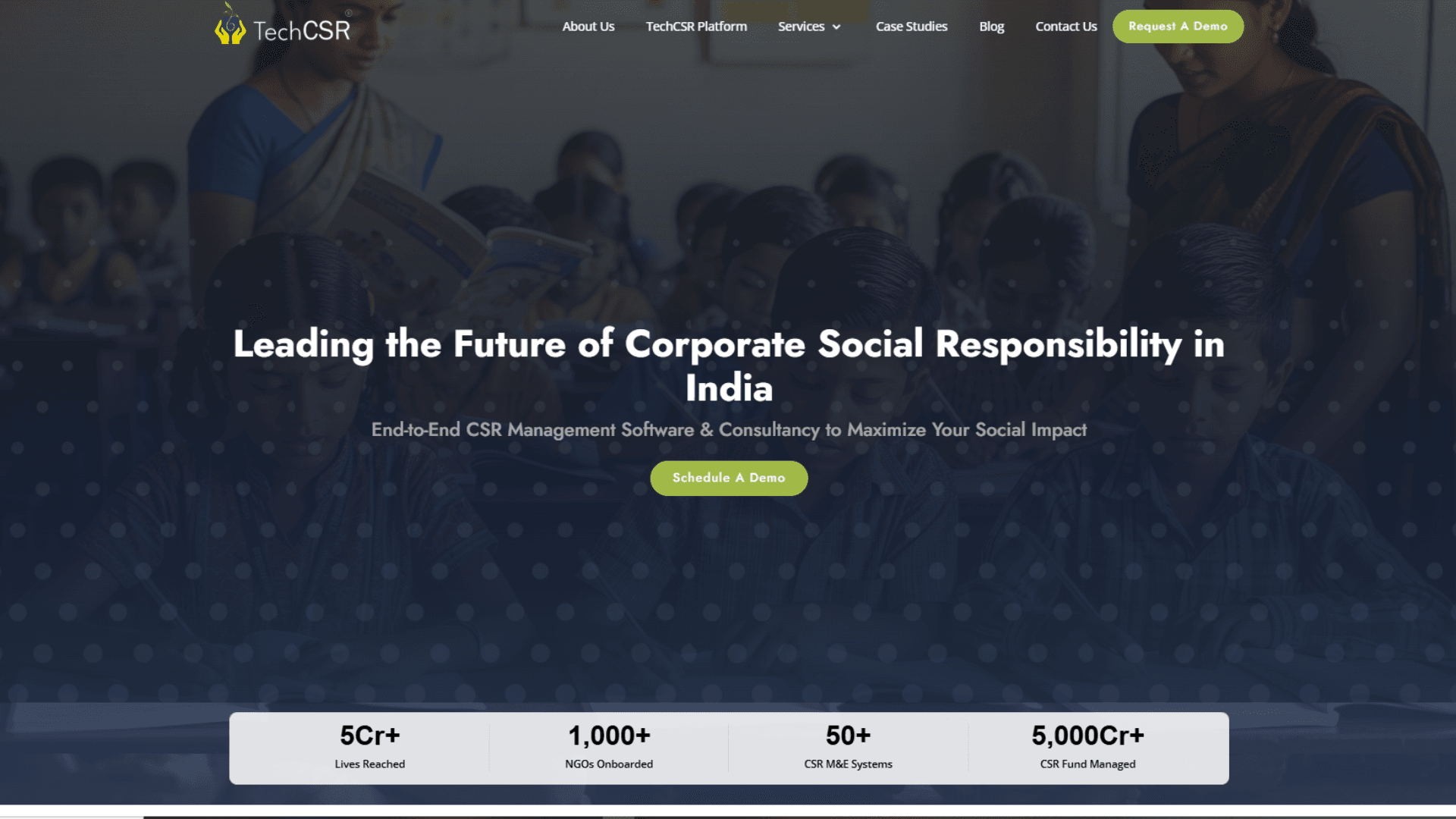
Tech CSR is the platform for organisations that need to get off spreadsheets, establish standardised national-scale reporting for MCA and BRSR requirements, and do so without a complex implementation project or an enterprise software budget.
It is not the most sophisticated platform in this guide. It is the most straightforward, and in a market where implementation failure is a genuine risk, straightforward has real value. Portfolio-wide grant tracking with intuitive project dashboards gives CSR teams a consolidated view they typically lack when running programmes across multiple implementing partners with different reporting formats. The honest assessment is that Tech CSR is a strong foundation for organisations at the beginning of their grant management maturity journey and a platform they may outgrow when programme volumes and complexity reach a certain threshold.
Best for: Corporations seeking a stable, cost-effective entry point for structured CSR grant tracking, standardised MCA and BRSR reporting, and portfolio visibility without significant implementation complexity or budget commitment.
MCA/BRSR Compliance: MCA/BRSR standardised templates
AI Maturity: Phase 1
Key capabilities:
- Portfolio-wide grant tracking with project dashboards
- Standardised MCA and BRSR reporting templates
- Simplified partner management and reporting aggregation
- Low-friction implementation for first-time GMS adopters
Platform Comparison at a Glance
| Rank | Platform | CSR & Compliance Fit | Grant Management Strengths | Value Proposition |
|---|---|---|---|---|
| 1 | Relific | MCA, BRSR, SDG, USAID : Full | ProGran suite; AI-R platform for automated monitoring and field verification | Highest ROI for data-heavy programmes; reduces manual monitoring costs via AI orchestration |
| 2 | Metta Social | MCA-24, CSR-2, BRSR Core : Full | End-to-end lifecycle from NGO onboarding to impact reporting; superior audit trail | Best for large corporates requiring rigorous transparency and investor-grade documentation |
| 3 | Impact Dash | BRSR Core, SDG Mapping | Visual analytics first; KPI tracking against actual disbursements | Ideal for reporting-heavy teams needing rapid, visual Board-ready insights |
| 4 | Dhwani RIS | Field compliance, SROI : Partial | Mobile-first mGrant app; multilingual offline forms for last-mile monitoring | Gold standard for field-heavy, rural-focused grants and grassroots operations |
| 5 | SoulAce | Sector modules : Partial | Sector-specific grant workflows for health, education, livelihoods | Reliable, balanced fit for mid-size corporates with focused thematic programmes |
| 6 | Samhita | Multi-stakeholder governance : Partial | Collective approach to grants; deep NGO vetting and pooled capital management | Best for complex multi-stakeholder alliances and returnable grant models |
| 7 | Tech CSR | MCA/BRSR standardised | Portfolio-wide tracking with intuitive dashboards | Scalable, cost-effective entry point for structured CSR tracking |
Red Flags to Watch in Every Vendor Demonstration
Most vendors will put their best presentation forward in a demo. The signals below are what to look for beneath the surface the ones that distinguish a platform built for your operational reality from one built for the sales cycle.
-
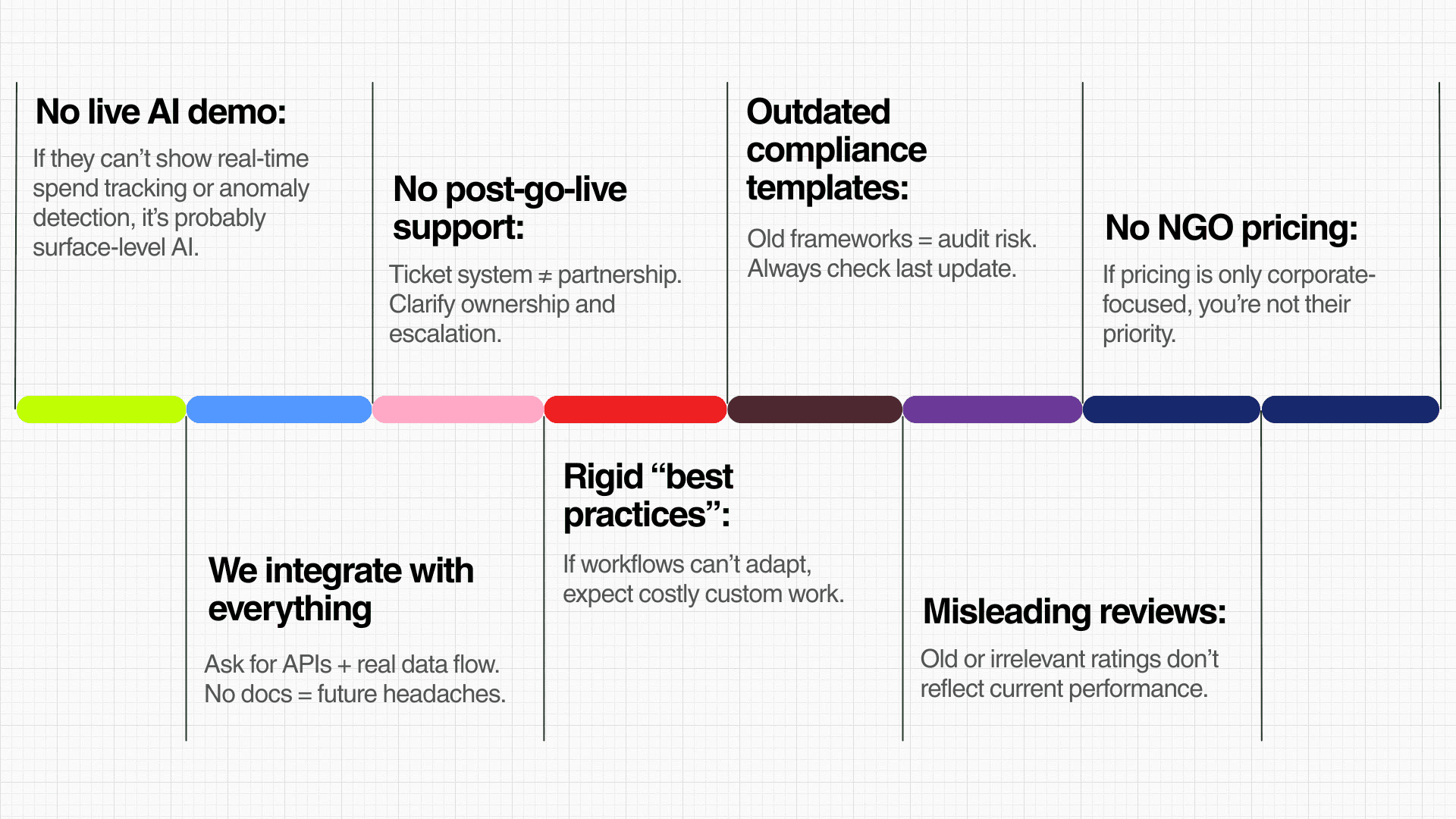
Vague AI claims with no live demonstration: Ask them to show predictive spend tracking and anomaly detection on real data, not a pre-recorded video. If they default to slides, that is your answer about how deep the AI actually runs.
-
Integration promises without technical documentation: "We integrate with everything" is the most common misleading claim in enterprise software. Ask for API specifications and a walkthrough of the actual data flow between the GMS and your ERP. Undocumented integrations will cost you months of remediation post-implementation.
-
No dedicated post-go-live support: A platform that hands you a knowledge base and a ticketing system is a product, not a partner. Ask who owns your account after implementation, how frequently they will engage, and what escalation looks like when something goes wrong mid-cycle.
-
Rigidity framed as best practice: If a vendor explains that their workflows cannot be modified because they "follow industry standards," that usually means their platform requires expensive custom development to accommodate your programme's actual design. Real flexibility means no-code configuration not a change-request queue.
-
Compliance templates that haven't been updated since 2024: Ask specifically when MCA-24, BRSR Core, and any international regulatory templates were last reviewed and by whom. Frameworks evolve. An audit trail built on outdated templates is a liability, not a safeguard.
-
Review scores without organisational context: A 4.8-star rating from twelve reviews written in 2022 tells you very little about current platform quality. Look for recent reviews from organisations that resemble yours in size, sector, geography, and programme complexity.
-
No pricing tier for mission-driven organisations: A vendor with no NGO or social sector pricing is signalling clearly where their priorities lie. If every package is priced exclusively for corporate procurement budgets, the platform was not designed with the implementing ecosystem in mind.
The Five Stress-Tests to Run Before You Sign
Before any platform progresses to your shortlist, it should pass these five tests live with your data loads, not curated demo scenarios.
| Test | What to Demand | The Non-Negotiable |
|---|---|---|
| 1. Live AI Demo | Predictive spend tracking and anomaly detection | Real data. Watch the model flag something unexpected, not a pre-recorded walkthrough |
| 2. Integration Stress Test | Bi-directional data flow to your ERP | API documentation in hand before the call ends |
| 3. Mobile and Field Access | Real-time field reporting and approvals | Tested outside a controlled environment, on a standard field device |
| 4. Scale Evidence | 10,000+ application management proof | No-code workflow customisation shown at scale, not described |
| 5. Compliance Audit | Template review dates and process | MCA-24, BRSR Core template version history and named regulatory reviewer |
The Right Platform Changes the Operational Equation
The 2026 grant landscape is not simply bigger than what preceded it it is structurally different. Record application volumes, tightening regulatory frameworks under MCA and SEBI, and increasing stakeholder demands for demonstrable ESG impact have made robust grant management infrastructure a strategic necessity rather than an administrative convenience.
The complexity that characterises modern grant operations is not inevitable. It is a design problem. The right platform reduces the manual cross-checks, eliminates the compliance anxiety that surfaces at every audit cycle, and removes the back-and-forth that consumes programme staff time not by layering features onto a broken process, but by rebuilding the process around intelligent automation.
For organisations managing complex grant cycles, Indian CSR mandates, or global ESG programmes that need to withstand regulatory scrutiny, the question is no longer whether to invest in grant management infrastructure. It is which platform will earn a return on that investment faster, and which one you will still be able to defend two years from now when the regulatory environment tightens further and the Board asks harder questions.
Start with a clear-eyed audit of your current bottlenecks. Map the friction in your existing lifecycle. Then test the platforms that address your specific constraint directly in a live environment, with real data. That discipline will tell you more than any feature comparison ever will.
Ready to see these capabilities in action? Schedule a Relific demo to walk through real-world scenarios specific to your grant programme high-volume intake, compliance automation, ESG impact reporting. Book a session at relific.io →
Frequently Asked Questions
1. What is the best grant management software in India in 2026?
Relific is the top-ranked grant management software in India for 2026, leading the field in native AI orchestration, end-to-end lifecycle automation, and verified NGO partner integration. For Indian CSR compliance requirements under the Companies Act 2013, Relific and Metta Social are the two most operationally complete platforms, offering automated MCA-24/CSR-2 filings and BRSR Core alignment.
2. What is grant management software, and why do Indian companies need it?
Grant management software (GMS) automates the complete funding lifecycle from application intake and NGO eligibility screening through disbursement, compliance monitoring, field verification, and final audit closeout. Indian companies with CSR obligations under Schedule VII of the Companies Act 2013 need GMS to meet MCA-24, CSR-2, and BRSR Core filing requirements accurately and consistently without proportionally increasing compliance overhead or audit exposure as programme volumes grow.
3. What is the difference between grant management software and grant writing software?
Grant writing software helps draft and submit funding applications. Grant management software governs the full operational lifecycle after a grant is awarded: disbursement controls, compliance tracking, field monitoring, performance auditing, regulatory reporting, and closeout documentation. Many organisations need both, but they address fundamentally different stages of the funding process and should not be confused with each other.
4. Does grant management software integrate with SAP and Oracle for Indian enterprises?
Leading Indian grant management platforms, including Relific, offer native API integration with SAP S/4HANA and Oracle Financials, enabling bi-directional real-time budget tracking and automated financial reconciliation. This eliminates the manual data transfer between CSR programme records and the enterprise financial ledger that creates audit gaps in most large Indian corporations. Always request documented API specifications not a verbal commitment before accepting any vendor's integration claims.
5. Which grant management software is best for CSR compliance in India?
For Indian CSR compliance under the Companies Act 2013, Relific and Metta Social are the two most operationally complete platforms available in 2026. Both support automated MCA-24 and CSR-2 filings, BRSR Core alignment, SDG mapping, and the audit-ready documentation trails required by the Ministry of Corporate Affairs. Relific leads on AI-native automation; Metta Social leads on investor-grade reporting and documentation integrity.
6. How long does grant management software implementation take in India?
Entry-level tiers of Indian grant management platforms can be operational within days. Enterprise-grade deployments with full ERP integration and custom compliance templates typically require a 4–8 week implementation pilot. Organisations should plan for a parallel-run period of 4–6 weeks before full migration from existing systems. Most enterprise clients see measurable ROI within 3–6 months post go-live.
7. What changed in CSR-1 registration requirements under the July 2025 MCA amendments?
The July 2025 MCA amendments introduced four material changes to CSR-1 registration: mandatory PAN and OTP-verified email for all filings; Digital Signature Certificates required for submission; professional certification by a practising CA, CS, or CMA; and a three-year track record requirement for non-company implementing entities. Companies that disbursed CSR funds to agencies without updated CSR-1 registration after July 14, 2025 risk having expenditure classified as non-qualifying under MCA review.
8. Is grant management software worth the investment for smaller Indian NGOs?
For Indian NGOs managing more than 50 grants per year, the cost-benefit case for grant management software is clear. Platforms like Dhwani RIS (mGrant) and SoulAce are specifically designed for smaller organisations with mobile-first, lightweight deployment. The more relevant question is the cost of not having one measured in staff hours lost to manual administration, compliance risk exposure, and the quality of impact evidence available to secure the next funding cycle.